

We independently evaluate all of our recommendations. If you click on links we provide, we may receive compensation.
If you’ve spent any time scrolling through social media lately, you’ve probably seen “salmon sperm skincare” pop up between glass skin tutorials, Korean skincare trends and dewy serum hauls. The ingredient behind the buzz is PDRN, and it’s quickly becoming one of the most talked-about actives in beauty. But what does the science actually say, and is it worth adding to your routine?
By the end of this article, you’ll know how to choose effective PDRN products, how to slot a PDRN serum into your routine step by step, and how PDRN stacks up against retinol, hyaluronic acid and exosomes.
Key Takeaways
- What it is: PDRN (polydeoxyribonucleotide) is a chain of DNA fragments, often sourced from salmon, used in clinical aesthetics for wound healing and tissue repair before it reached skincare.
- Where the evidence is strongest: injectables and professional treatments like microneedling. Topical PDRN is promising, but the clinical data is newer.
- What it targets: fine lines, uneven tone, post-acne marks and dullness, with a low irritation profile that makes it a gentler option than retinol for many people.
- What matters on the label: concentration, molecular weight and the supporting ingredients (hyaluronic acid, ceramides, peptides) matter as much as the PDRN itself.
- Safety: generally well tolerated, but check with a doctor if you have a fish allergy, are pregnant, or have active skin infections. Always patch test.
- Vegan options exist: plant-derived and yeast-derived PDRN is emerging, with early but encouraging data.
In this guide
Verdict: Is PDRN Worth It?
Yes, as a supporting player, not a miracle. PDRN is worth trying if you want gentle, long-term skin quality (better bounce, hydration and a calmer, smoother look) or if retinol is too harsh for you. It is not worth it if you expect injectable-level lifting from a serum. The strongest evidence comes from clinic treatments, and topical results are more modest and slower.
The best-value way to try it: pick a well-formulated PDRN product in the $–$$ range, patch test, use it consistently for 8 weeks, and keep wearing SPF every da
Who should skip PDRN (or ask a doctor first)
- Fish or shellfish allergy. Salmon-derived PDRN is highly purified, but a reaction can't be fully ruled out. Consider a vegan version, and ask your doctor.
- Pregnant or breastfeeding. No robust studies confirm topical PDRN is safe in pregnancy. Ask your healthcare provider first.
- Active infections, open wounds or broken skin. Don't apply new actives to compromised skin. Wait until it has healed, or follow your clinician's advice.
- Very reactive skin. Patch test on your jawline or inner arm for several days first.
Quick Picks: Best PDRN Skincare Products
| Best for | Product | PDRN source | Price | Link |
|---|---|---|---|---|
| Best overall and best budget | Medicube PDRN Pink Peptide Serum | Salmon DNA (a Rose PDRN vegan version also exists) | $ | Purchase Here |
| Best for hydration and sensitive-leaning skin | Anua 100+ PDRN + Hyaluron Serum | Salmon-derived Sodium DNA | $$ | Purchase Here |
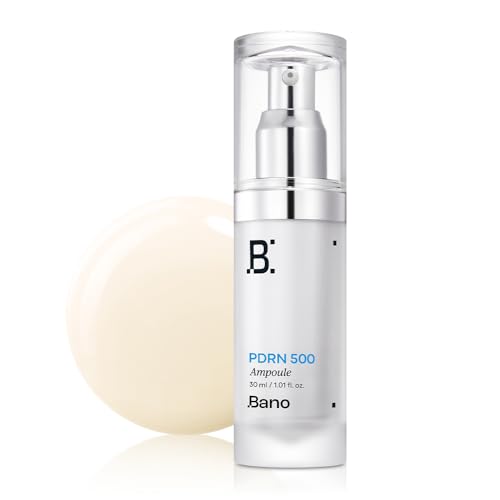
| Best vegan | Bano PDRN 500 Ampoule | Fermented yeast (fish-free) | $$ | Purchase Here |
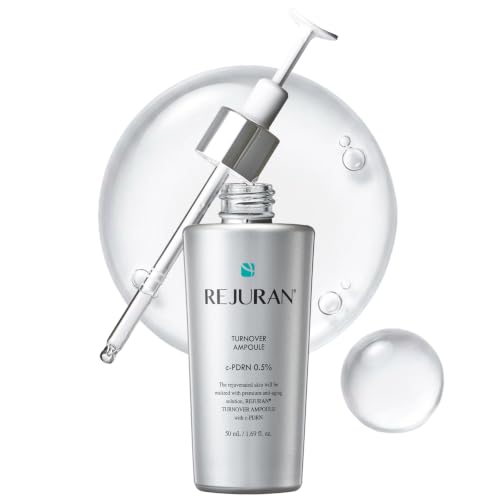
| Best splurge for barrier support | Rejuran Healer Turnover Ampoule | Salmon-derived | $$$ | Purchase Here |
| Best eye treatment | Medicube PDRN Pink Peptide Eye Cream | Salmon DNA (contains retinol, see below) | $ | Purchase Here |
| Best sheet mask | Medicube PDRN Pink Collagen Gel Mask (4-pack) | Salmon DNA | $ | Purchase Here |
What Is PDRN in Skincare?
PDRN refers to chains of DNA fragments (polydeoxyribonucleotides) originally developed for clinical wound healing and tissue repair. They are typically derived from salmon or trout DNA and highly purified to remove proteins and potential allergens. Newer formulas can use plant-based, yeast-derived or lab-made DNA alternatives. The molecule is similar enough to human DNA that it can act as a repair “signal,” nudging skin cells to regenerate more efficiently.
PDRN first became popular in Korean clinics as an injectable “skin booster,” used by dermatologists and plastic surgeons to speed healing and improve firmness. Brands then reformulated it into over-the-counter serums, ampoules, creams, sheet masks and eye treatments. The at-home versions are gentler and more gradual than in-office PDRN injections, which is the trade-off for convenience.
Korean skincare trends like glass skin and the “dewy glow” pushed PDRN into the mainstream. Formulas range from simple hydration-first serums to multi-active blends that combine PDRN with niacinamide, peptides, growth factors or exosomes.
Core Benefits of PDRN Skincare
Fine lines and uneven tone
PDRN may help soften the look of fine lines and early wrinkles over several weeks by supporting skin repair and structure. It may also help with uneven tone and post-acne marks, although most of that evidence comes from injectable and lab studies rather than topical products.
Texture and firmness
Consistent use tends to leave skin looking smoother and more refined, which feeds into the glass skin effect. The aim is better elasticity and bounce over time rather than just temporary plumping from humectants. In a randomized, placebo-controlled trial of 48 women with moderate photoaging, skin hydration rose 23.4% after 12 weeks of PDRN injections, compared with 5.1% with saline (Kim et al., 2019). That study used injections rather than a serum, so topical results are likely to be more modest.
Barrier repair and soothing
PDRN is thought to support the skin barrier and calm redness or mild irritation through a different mechanism than classic humectants. Many users with sensitive skin find PDRN formulas comfortable, though individual reactions vary. The instant glow you get from a first application usually comes from the rest of the formula (hydrators and light-reflecting ingredients), not from PDRN itself.
PDRN vs Retinol, Hyaluronic Acid and Exosomes
Here’s how PDRN compares with the other big names, so you can decide whether to add it, swap it or layer it.
| PDRN | Retinol | Hyaluronic acid | Exosomes | |
|---|---|---|---|---|
| What it is | DNA fragments that support skin repair | Vitamin A derivative | Humectant that holds water | Tiny cell-signaling packages |
| Main job | Repair, barrier support, long-term skin quality | Fine lines, pigmentation, cell turnover | Instant hydration and plumping | Signaling and recovery (claims vary) |
| How fast | Weeks (4–8+) | Weeks to months | Immediate | Unclear |
| Irritation | Usually low | Often higher: dryness, peeling | Very low | Usually low |
| Evidence | Strong for injectables, still developing for topicals | Decades of clinical data | Well established for hydration | Limited human data |
| Best for | Retinol-sensitive or barrier-stressed skin | Proven anti-aging results | Dehydrated skin | Advanced, layered routines |
PDRN vs retinol
Retinol has decades of clinical data behind it for fine lines, pigmentation and turnover, but it can cause peeling, dryness and purging. PDRN aims for gentler repair with far less irritation. In a 28-day split-face trial of 31 women with sensitive skin, a 0.1% PDRN eye cream improved dermal thickness and density roughly two-fold more than a 0.1% retinol eye cream, and no adverse reactions were reported (Ye et al., PLOS ONE, 2026). It was a small, short study on the eye area, and several authors are affiliated with skincare companies, so treat it as encouraging rather than conclusive. PDRN is a sensible option if you can’t tolerate retinol, not a proven replacement. Our guide to using vitamin C and retinol together covers the retinol side.
PDRN vs hyaluronic acid
Hyaluronic acid draws water into the skin for instant plumping. PDRN works differently, supporting the skin’s own repair processes over time. They’re partners, not competitors. See when to apply hyaluronic acid for layering order.
PDRN vs exosomes
Exosomes carry proteins and RNA signals between cells, while PDRN provides DNA fragments that support repair signaling. Some formulas combine them, but head-to-head clinical data is very scarce, so treat bold claims with caution.
PDRN is rarely a full replacement for any of these. It works best as a complementary step that supports recovery while other ingredients handle hydration, turnover or brightening. If you’re curious about another repair-focused active, read our beginner’s guide to peptides.
How to Use PDRN in Your Routine
Serums and ampoules are the most popular formats because they’re lightweight and layer easily under moisturizer. Not sure about the order of everything else? Our guide to what order to apply skincare has the full sequence.
Step-by-step routine
- Cleanse: Start with a clean face.
- Toner or essence: Optional hydrating layer.
- PDRN serum: On slightly damp skin. Use the amount on the label; wait 30–60 seconds.
- Moisturizer: Seals everything in. Richer cream at night if dry.
- SPF (morning): Non-negotiable.
Start once a day if your skin is sensitive or you’re introducing other actives, then build up to morning and evening as your skin adjusts. Applying to slightly damp skin and waiting a minute before thicker creams helps avoid pilling.
What to expect and when
- First days: Hydration and a little extra radiance, mostly from the supporting ingredients.
- 4–8 weeks: Smoother-looking texture and softer-looking fine lines with consistent use.
- 3 months+: Firmness and bounce are slower to change with topical use alone.
These are typical expectations, not guarantees. Results vary by product, skin type and consistency.
How to Choose a PDRN Product
Not all PDRN skincare is equal. Concentration, molecular weight and the full formula matter more than front-of-box claims.
- Check the ingredient list for PDRN, Sodium DNA or polynucleotides, ideally with a stated percentage or ppm. Many studies use around 0.1%.
- Look for delivery tech. Low molecular weight claims or encapsulation may help penetration versus large, unmodified DNA chains.
- Favor a strong supporting cast such as hyaluronic acid, ceramides, glycerin, squalane, niacinamide or peptides.
- If your skin is sensitive, avoid heavily fragranced or high-alcohol formulas, and patch test for several days before full-face use.
The Our favourite PDRN Skincare
How we picked: every product here lists PDRN or Sodium DNA, and was chosen for formula quality, fragrance and ingredient transparency, and reputation with reviewers and customers.
BEST OVERALL & BEST BUDGET
A widely loved, affordable serum that pairs PDRN with five peptides and niacinamide for a plump, glowy finish. A good first PDRN to try.
- Price: $
- PDRN + peptides + niacinamide
- Medicube sells salmon and Rose PDRN (vegan) versions, so check which the listing shows
BEST FOR HYDRATION & SENSITIV SKIN
A lightweight, fragrance-free, hydration-first serum that absorbs easily. A good pick if you want PDRN with plenty of hyaluronic acid and no fragrance.
- Price: $$
- PDRN + hyaluronic acid
- Fragrance-free; patch test as usua
BEST VEGAN
A fish-free option with PDRN derived from fermented yeast, in a light, spreadable, fragrance-free texture. Ideal if you avoid animal-derived ingredients or fish.
- Price: $$
- Yeast-derived PDRN
- Fragrance-free
BEST SPLURGE FOR BARRIER SUPPORT
A silky, non-sticky ampoule from the brand known for PDRN treatments, aimed at barrier support and a calmer-looking complexion. It comes as a set of single-use ampoules.
- Price: $$$
- Salmon-derived PDRN
- Best for barrier-stressed skin
BEST EYE TREATMENT
A lightweight eye cream with PDRN and peptides for fine lines and a tired-looking eye area.
- Price: $
- PDRN + peptides + niacinamide
- Heads up: some ingredient lists include retinol, so skip it if you're pregnant or avoiding retinoids, and read the label on your listing
BEST SHEET MASK
A jelly-style gel mask that turns from opaque to transparent as it absorbs. A fun weekly boost of hydration with PDRN and collagen. Browse more in our best sheet masks guide.
- Price: $
- PDRN + collagen
- Use 1–2 times a week
Want more Korean picks? See our best Korean skincare brands.
Is PDRN Safe? Allergies, Sensitivity and Pregnancy
PDRN is generally considered safe at cosmetic concentrations and has a long history of medical use in wound healing and tissue repair. It has a low irritation profile in most studies, but “generally well tolerated” is not the same as “safe for everyone.” A 2026 systematic review of seven randomized trials (183 participants) reported no serious treatment-related adverse events (Alshehri, Cureus, 2026). The trials were small and used varied protocols, and the abstract doesn’t say how PDRN was delivered, so the result speaks more to PDRN’s clinical use than to any specific cosmetic serum.
If you’re allergic to fish or shellfish, be careful. Salmon-derived PDRN is highly purified to remove proteins, but sensitivity can’t be fully ruled out. A board-certified dermatologist can tell you whether PDRN is right for your situation.
Many people with sensitive or redness-prone skin find PDRN formulas soothing, but irritation is possible with any new product. Introduce it gradually and patch test first. For more gentle options, see our best skincare for sensitive skin.
Pregnancy and breastfeeding: topical PDRN is often considered lower risk than retinoids, but no robust studies confirm safety in pregnancy. Check with your healthcare provider first.
Side effects, when they happen, are usually temporary redness, mild burning or small breakouts. If a reaction persists, stop using it and get professional advice.
Salmon vs Vegan PDRN: Source, Ethics and Efficacy
Traditional PDRN is extracted from salmon, purified and sterilized. It has the longest clinical track record, especially as an injectable. It does raise ethical and sustainability questions for people who avoid animal-derived ingredients.
Vegan alternatives use plant, yeast or lab-designed DNA fragments to mimic PDRN’s structure without animal input. Look for labels like “vegan PDRN,” “plant-derived PDRN” or “Rose PDRN.” Plant- and microbe-derived PDRN is supported mainly by lab studies so far, and a 2026 narrative review found no head-to-head clinical trials against salmon PDRN (Rodríguez-Aleriano et al., Cosmetics, 2026). In other words, nobody can yet say whether vegan PDRN works as well as, better than or worse than the salmon version, and thinner evidence doesn’t mean it doesn’t work.
Choose based on your ethics, allergy status and trust in the brand’s testing rather than assuming one source is better.
★ Our top vegan pick is the Bano PDRN 500 Ampoule.
Realistic Results and Limitations of Topical PDRN
There’s a real difference between clinic injections and over-the-counter products. Injected PDRN bypasses the skin barrier and acts in the dermis. Topical skincare can’t match that, so expect hydration, barrier support and mild texture smoothing rather than dramatic lifting or scar improvement.
Many glowing reviews also reflect the whole formula (hyaluronic acid, niacinamide, peptides), not PDRN alone. That’s not a knock on PDRN, it just works best inside a well-built formula. Think of it as support for long-term skin quality, not a quick fix or a replacement for professional treatments. If you’re considering microneedling, read when you can wear makeup after microneedling.
Combining PDRN with Korean Skincare Routines
PDRN fits Korean skincare’s habit of layering gentle, hydrating steps. In a K-beauty routine it usually sits after toner or essence and before heavier emulsions or creams.
Good pairings:
- PDRN + hyaluronic acid for deeper hydration
- PDRN + niacinamide for tone and barrier support
- PDRN + ceramides for sensitive-skin repair
You can use PDRN with retinol or vitamin C, but start slowly. If you’re using strong acids, high-strength vitamin C or retinoids, alternate nights at first and watch for irritation. Some people find PDRN helps their skin feel more comfortable alongside retinol, though research on this is limited.
Whatever you layer, wear sunscreen every morning. Daily UV protection is still the most important anti-aging step, and no active can outpace unprotected sun damage. Our pick of the new Neutrogena BEMT sunscreens is a good place to start.
Frequently Asked Questions About PDRN
Does PDRN skincare really give "glass skin," or is that just marketing?
PDRN alone does not create instant glass skin. It supports long-term improvements in texture, bounce, and hydration that contribute to a smoother, more reflective skin surface over time. The immediate glass skin look you see in ads often comes from formula design-emollients, light-reflecting ingredients, and hyaluronic acid doing their thing at the surface-while PDRN works more slowly on deeper structural repair. Look for before-and-after photos taken over 4–8 weeks rather than expecting a single-application miracle.
Can I use a PDRN serum every day with retinol?
Most people can safely combine PDRN and retinol. PDRN’s soothing, barrier-supportive properties can actually help offset retinol-related dryness and sensitivity. If your skin is very reactive, start by alternating nights-PDRN one night, retinol the next-then increase overlap as tolerated. Always pair retinol with daily SPF, and introduce only one new active at a time so you can track any irritation clearly.
How long does it take to see results from PDRN skincare?
Early hydration and a subtle glow can appear within a few days to two weeks, especially in well-formulated PDRN products with strong hydrating co-ingredients. Visible changes in fine lines, skin texture, and elasticity usually require at least 4–8 weeks of consistent, twice-daily use. More mature or severely photo-damaged skin may need 3 months or longer to appreciate the full benefit, and results from topical skincare will still be subtler than those from injectable PDRN or dermatologists-administered procedures.
Is PDRN safe for acne-prone or oily skin?
PDRN itself is not comedogenic, and many acne-prone users appreciate its calming and repair-focused properties. If you have oily or breakout-prone skin, choose lightweight, non-oily PDRN serums or gels and avoid very occlusive creams that might trap sebum. Patch test on a small cheek or jawline area for about a week before committing to full-face daily use, especially if the product includes richer emollients.
Can vegans or those avoiding animal products still try PDRN-style skincare?
Traditional PDRN from salmon sperm is not vegan, but newer plant-based or lab-synthesized PDRN analogues offer similar signaling benefits without animal sourcing. Look for product descriptions and INCI lists with terms like “vegan PDRN,” “phyto PDRN,” or plant-derived polynucleotides. Performance varies by technology, so look for brands that share clinical data on their specific vegan PDRN ingredient rather than relying only on beauty marketing language.
